All cases›Terrorism›Boston Marathon bombing
TerrorismSolved

Boston Marathon bombing

Two bombs exploded near the Boston Marathon finish line, killing three people and injuring hundreds.

Place
Boston, Massachusetts, United States
Date
15 Apr 2013
Status
SolvedAuthorities consider the case resolved, usually after identifying or convicting the responsible person.
Sources
7 cited sources

Updated 29 Aug 2026

Overview

Case overview

The bombs detonated seconds apart on Boylston Street as runners were approaching the finish of the 117th Boston Marathon. The devices had been packed with shrapnel and left among spectators. Emergency workers and bystanders treated a mass-casualty scene while investigators began collecting physical evidence and thousands of photographs and videos. [1]

After the FBI released images of the suspects, the brothers killed MIT Police Officer Sean Collier, carjacked a vehicle and exchanged gunfire with police in Watertown. Tamerlan Tsarnaev died from injuries sustained during the confrontation. Dzhokhar Tsarnaev was found hiding in a boat the following evening. His convictions remain in place; litigation over his death sentence continued after a 2024 appeals-court order concerning possible juror bias. [2]
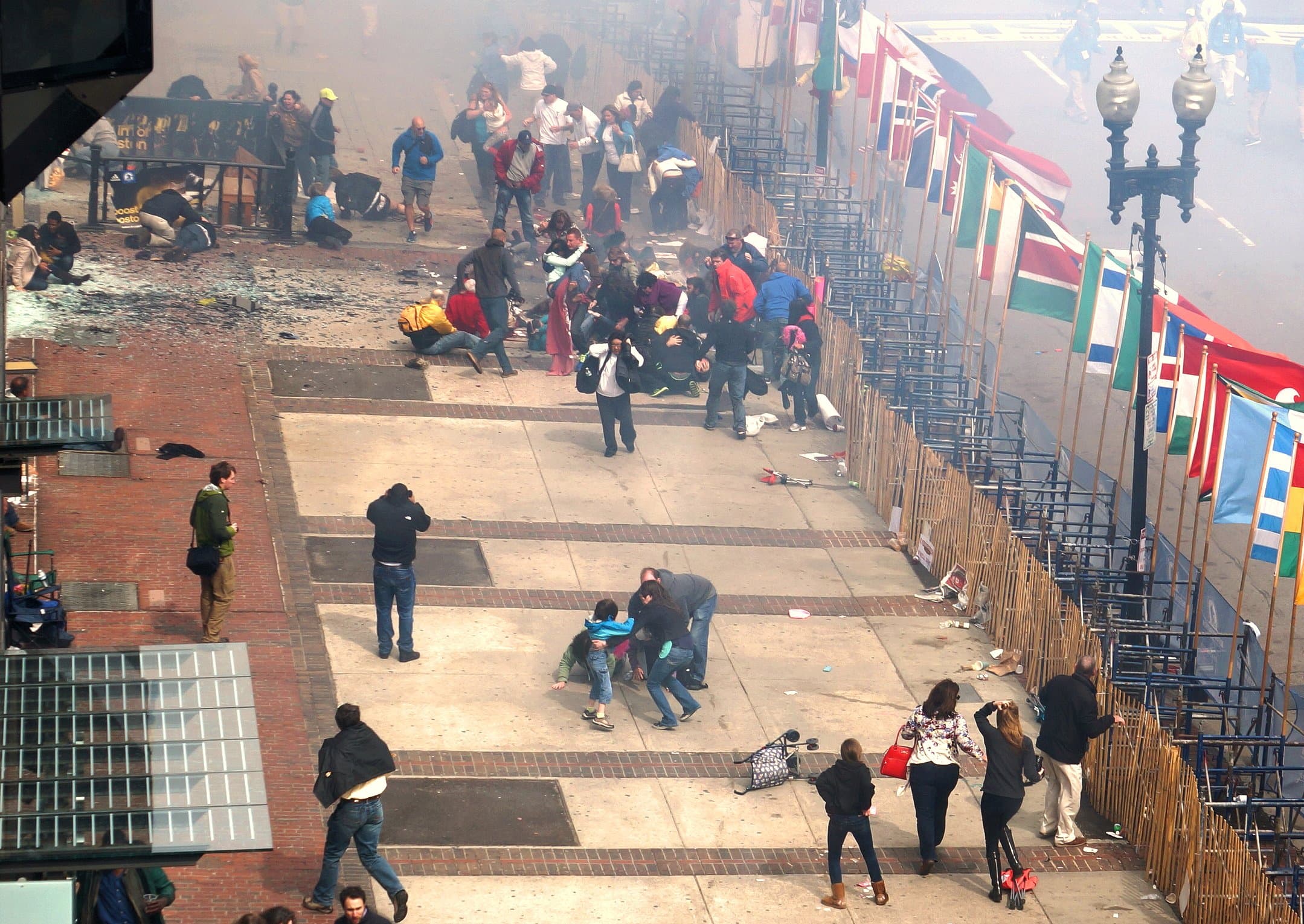
Spectators helping victims soon after the attack.
Spectators helping victims soon after the attack.Aaron Tang · CC BY 2.0 · View original ↗
Detailed chronology

Key events

8 sourced milestones

Major events in the case, shown in chronological order.

  1. Two bombs explode near the finish line

    The devices detonated seconds apart on Boylston Street, killing Krystle Campbell, Lingzi Lu and Martin Richard and injuring hundreds of other people.

    Source: Federal Bureau of Investigation ↗
  2. FBI releases images of two suspects

    Investigators published surveillance images of Tamerlan and Dzhokhar Tsarnaev and asked the public to help identify them.

    Source: Federal Bureau of Investigation ↗
  3. Manhunt moves through Cambridge and Watertown

    The brothers killed MIT Police Officer Sean Collier, carjacked a vehicle and exchanged gunfire with police. Tamerlan Tsarnaev died after the confrontation.

    Source: U.S. Department of Justice ↗
  4. Dzhokhar Tsarnaev is captured

    After a daylong search, police found Tsarnaev hiding in a boat in a Watertown backyard and took him into custody.

    Source: Federal Bureau of Investigation ↗
  5. Federal grand jury returns a 30-count indictment

    The indictment charged Tsarnaev with terrorism, bombing, firearms and other offences arising from the attack and manhunt.

    Source: U.S. Attorney's Office, District of Massachusetts ↗
  6. Jury convicts Tsarnaev and court imposes death sentence

    A federal jury found Tsarnaev guilty on all 30 counts on 8 April. The court formally imposed six death sentences and multiple prison terms on 24 June.

    Source: U.S. Department of Justice ↗
  7. Death sentence is vacated, then reinstated

    The First Circuit vacated the death sentences in 2020. The U.S. Supreme Court reversed that decision in 2022, restoring them.

    Source: Supreme Court of the United States ↗
  8. Appeals court orders inquiry into possible juror bias

    The First Circuit left the death sentence in place but directed the trial court to investigate claims involving two jurors and decide whether a new penalty-phase trial is required.

    Source: U.S. Court of Appeals for the First Circuit ↗
Watch

Case videos

3 videos

Boston Marathon bombing: The attack, the arrest, the recovery

60 Minutes

Combines reporting on the bombing, the manhunt and the city's recovery.

Boston Marathon bombings and manhunt: As it happened

The Wall Street Journal

A concise contemporary timeline of the attack and search for the suspects.

Videos from the Boston Marathon bombing trial

CBS Mornings

Explains how video evidence and survivor testimony were presented at trial.

Play here or open the original video on YouTube.

Discussion

Case discussion

Ask questions, compare sources, and share documented updates.

No discussions yet
Join the conversation

Reading is open to everyone. Create an account to contribute, reply, and mark useful findings.

Start the conversation
No discussions yet

Begin with a careful question or a documented finding.