All cases›Terrorism›Unabomber case
TerrorismSolved

Unabomber case

Theodore John Kaczynski ( kə-ZIN-skee; May 22, 1942 – June 10, 2023), also known as the Unabomber ( YOO-nə-bom-ər), was an American mathematician and domestic terrorist.

Place
Multiple locations in the United States, United States
Date
1978–1995
Status
SolvedAuthorities consider the case resolved, usually after identifying or convicting the responsible person.
Sources
2 cited sources

Updated 23 Aug 2026

Overview

Case overview

Theodore John Kaczynski ( kə-ZIN-skee; May 22, 1942 – June 10, 2023), also known as the Unabomber ( YOO-nə-bom-ər), was an American mathematician and domestic terrorist. In 1979, Kaczynski became the subject of what was, by the time of his arrest in 1996, the longest and most expensive investigation in the history of the Federal Bureau of Investigation (FBI). [1]

He authored a roughly 35,000-word manifesto and social critique, Industrial Society and Its Future (1995), which opposes all forms of technology, rejects leftism, advocates cultural primitivism, and ultimately suggests violent revolution. After his arrest in 1996, Kaczynski—maintaining that he was sane—tried and failed to dismiss his court-appointed lawyers because they wished him to plead insanity to avoid the death penalty. The UNABOM Task Force set up a toll-free telephone hotline to take calls related to the investigation, with a $1 million (equivalent to approximately $2.23 million in 2025) reward for anyone who could provide information leading to the Unabomber's capture. [2]
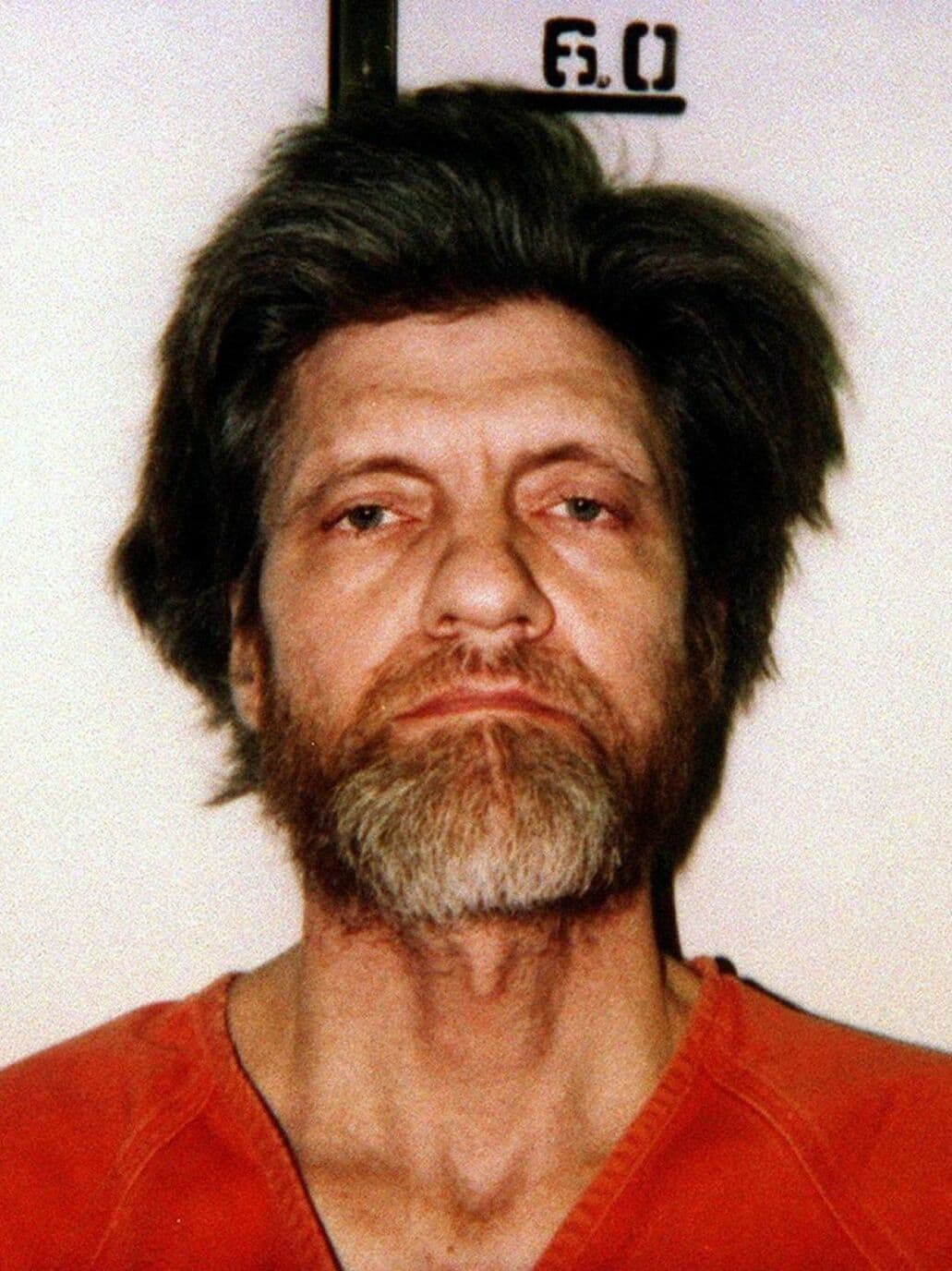
Booking photo of Theodore Kaczynski
Booking photo of Theodore KaczynskiFederal Bureau of Investigation · Public domain · View original ↗
Detailed chronology

Key events

7 sourced milestones

Major events in the case, shown in chronological order.

  1. The central incident occurs

    After his capture, theories emerged naming Kaczynski as the Zodiac Killer, who murdered five people in Northern California from 1968 to 1969.

    Source: Wikipedia ↗
  2. A central event is documented

    Among the links that raised suspicion were that Kaczynski lived in the San Francisco Bay Area from 1967 to 1969, that both individuals were highly intelligent with an interest in bombs and codes, and that both wrote letters to newspapers demanding the publication of their works with the threat of continued violence if the demand was not met.

    Source: Wikipedia ↗
  3. A central event is documented

    Kaczynski murdered 3 people and injured 23 others between 1978 and 1995 in a nationwide mail bombing campaign against people he believed to be advancing modern technology and the destruction of the natural environment.

    Source: Wikipedia ↗
  4. Between 1978 and 1995, Kaczynski mailed or hand-delivered a

    Between 1978 and 1995, Kaczynski mailed or hand-delivered a series of increasingly sophisticated bombs that cumulatively killed three people and injured 23 others.

    Source: Wikipedia ↗
  5. Kaczynski had returned to Chicago for the May 1978

    Kaczynski had returned to Chicago for the May 1978 bombing and stayed there for a time to work with his father and brother at a foam rubber factory.

    Source: Wikipedia ↗
  6. A central event is documented

    After his arrest in 1996, Kaczynski—maintaining that he was sane—tried and failed to dismiss his court-appointed lawyers because they wished him to plead insanity to avoid the death penalty.

    Source: Wikipedia ↗
  7. A central event is documented

    The UNABOM Task Force set up a toll-free telephone hotline to take calls related to the investigation, with a $1 million (equivalent to approximately $2.23 million in 2025) reward for anyone who could provide information leading to the Unabomber's capture.

    Source: Wikipedia ↗
Watch

Case videos

0 videos

No videos yet.
Discussion

Case discussion

Ask questions, compare sources, and share documented updates.

No discussions yet
Join the conversation

Reading is open to everyone. Create an account to contribute, reply, and mark useful findings.

Start the conversation
No discussions yet

Begin with a careful question or a documented finding.