All cases›Homicide›Jack the Ripper murders
HomicideCold case

Jack the Ripper murders

Attacks ascribed to Jack the Ripper typically involved women working as women in the sex trade who lived in the slums of the East End of London.

Place
Whitechapel, London, United Kingdom
Date
1888
Status
Cold caseThe case is unresolved but is not under continuous active investigation. It may reopen if new evidence appears.
Sources
2 cited sources

Updated 23 Aug 2026

Overview

Case overview

Attacks ascribed to Jack the Ripper typically involved women working as women in the sex trade who lived in the slums of the East End of London. A police investigation into a series of eleven brutal murders committed in Whitechapel and Spitalfields between 1888 and 1891 was unable to connect all the killings conclusively to the 1888 murders. [1]

At the inquest into Mylett's death, the jury returned a verdict of murder. He was briefly thought to be the Ripper, but was later discharged from court for lack of evidence on 3 March 1891. Eleven separate murders, stretching from 3 April 1888 to 13 February 1891, were included in a Metropolitan Police investigation and were known collectively in the police docket as the "Whitechapel murders". [2]
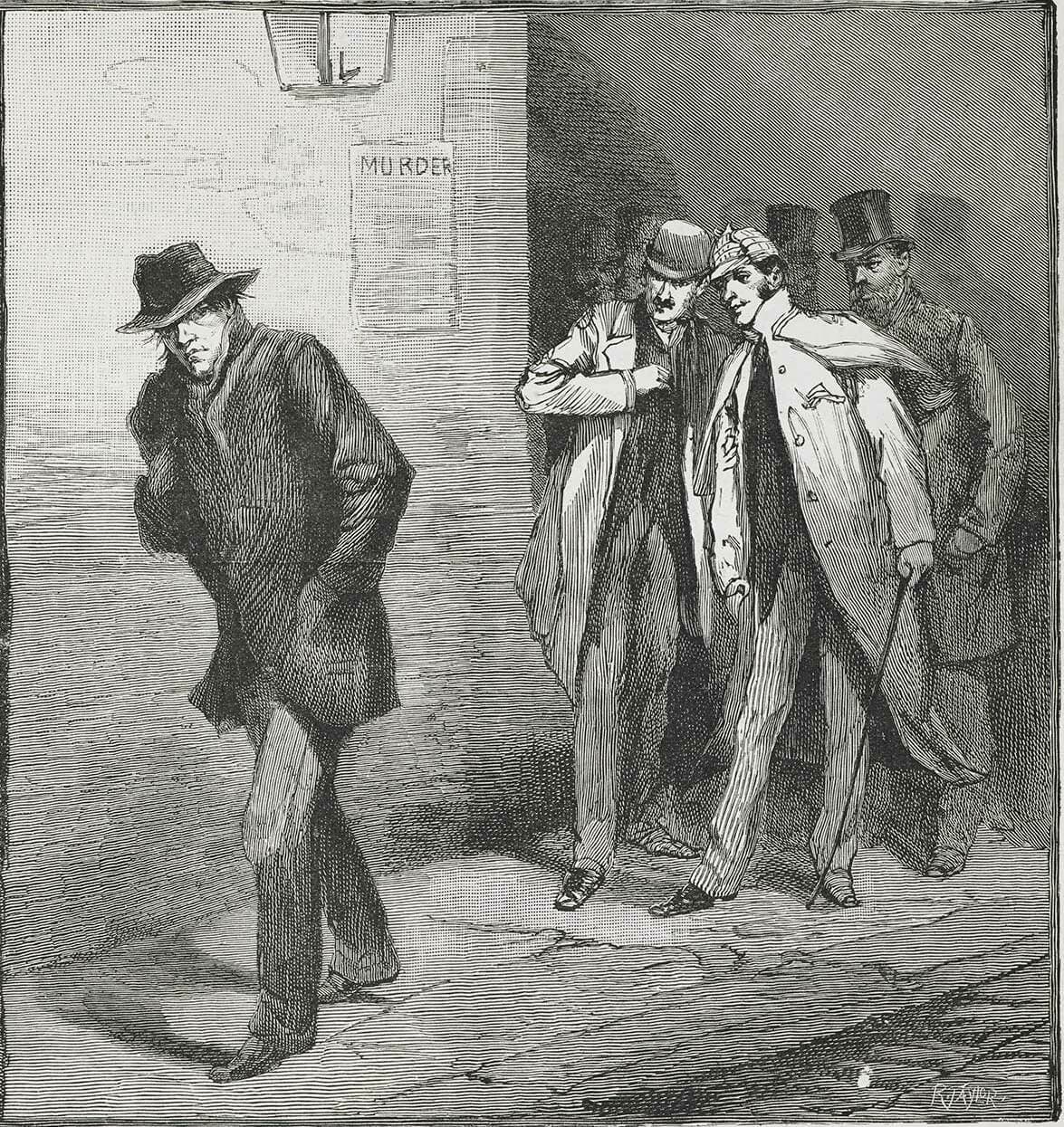
One of a series of images from the Illustrated London News for October 13, 1888 carrying the overall caption, "With the Vigilance Committee in the East End" . This specific image is entitled "A Suspicious Character" .
One of a series of images from the Illustrated London News for October 13, 1888 carrying the overall caption, "With the Vigilance Committee in the East End" . This specific image is entitled "A Suspicious Character" .R. Taylor (R. & E. Taylor (Firm)) · Public domain · View original ↗
Standard chronology

Key events

5 sourced milestones

Major events in the case, shown in chronological order.

  1. The case enters the public record

    Jack the Ripper was an unidentified serial killer active in and around the impoverished Whitechapel district of the East End of London, in 1888.

    Source: Wikipedia ↗
  2. The investigation develops

    The savagery of the Tabram murder, the lack of an obvious motive, and the closeness of the location and date to the later canonical Ripper murders led police to link this murder to those later committed by Jack the Ripper.

    Source: Wikipedia ↗
  3. A central event is documented

    Mary Jane Kelly is generally considered to be the Ripper's final victim, and it is assumed that the crimes ended because of the culprit's death, imprisonment, institutionalisation, or emigration.

    Source: Wikipedia ↗
  4. A central event is documented

    The overall direction of the murder enquiries was hampered by the fact that the newly appointed head of the CID, Assistant Commissioner Robert Anderson, was on leave in Switzerland between 7 September and 6 October, during the time when Chapman, Stride, and Eddowes were killed.

    Source: Wikipedia ↗
  5. Prosecutors file charges

    He was briefly thought to be the Ripper, but was later discharged from court for lack of evidence on 3 March 1891.

    Source: Wikipedia ↗
Watch

Case videos

0 videos

No videos yet.
Discussion

Case discussion

Ask questions, compare sources, and share documented updates.

No discussions yet
Join the conversation

Reading is open to everyone. Create an account to contribute, reply, and mark useful findings.

Start the conversation
No discussions yet

Begin with a careful question or a documented finding.