All cases›Terrorism›2019 Sri Lanka Easter bombings
TerrorismUnsolved

2019 Sri Lanka Easter bombings

On 21 April 2019, Easter Sunday, three churches in Sri Lanka and three luxury hotels in the commercial capital, Colombo, were targeted in a series of coordinated IS-related terrorist suicide bombings.

Place
Multiple locations in Sri Lanka, Sri Lanka
Date
21 Apr 2019
Status
UnsolvedNo person has been convicted, and the case remains unresolved.
Sources
3 cited sources

Updated 24 Aug 2026

Overview

Case overview

On 21 April 2019, Easter Sunday, three churches in Sri Lanka and three luxury hotels in the commercial capital, Colombo, were targeted in a series of coordinated IS-related terrorist suicide bombings. A total of 269 people were killed, with over 200 of them being Christians, including at least 45 foreign nationals, three police officers, and nine suicide bombers. [1]

On 12 January 2023, the Supreme Court of Sri Lanka ruled that the then-incumbent president Maithripala Sirisena and several other government authorities at the time failed to act on intelligence, and were ordered to pay compensation to victims. TID pre-bombing investigation It was later claimed that the Police Terrorism Investigations Division (TID) has been investigating the activities of the chief suspect Zahran, with an arrest warrant issued by the Colombo Magistrate's Court in August 2018 based on a 'B' report dated 2 July 2018 which the TID had submitted. [2]
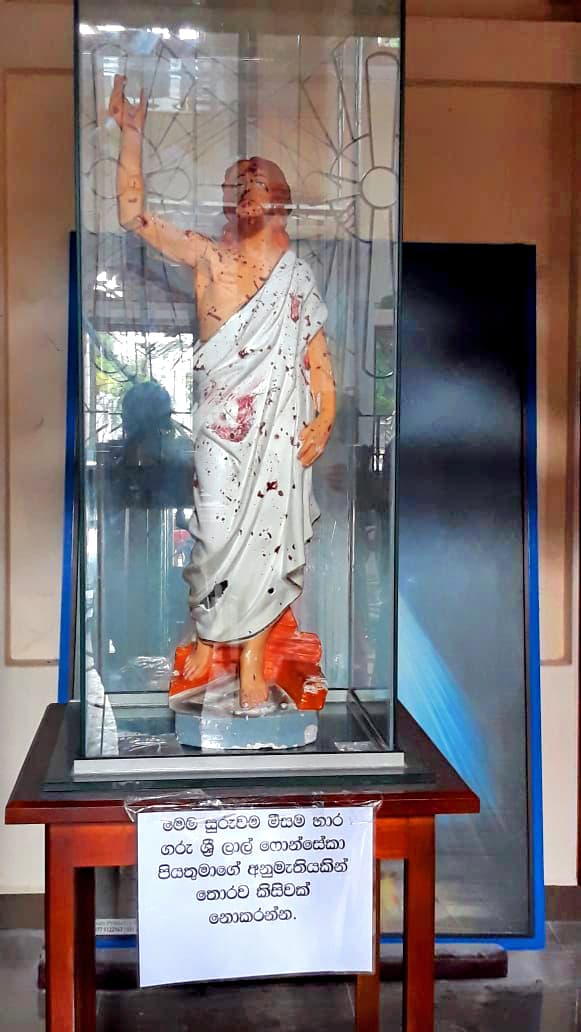
A statue at St. Sebastian's Church in Katuwapitiya, one of the sites attacked on Easter Sunday 2019
A statue at St. Sebastian's Church in Katuwapitiya, one of the sites attacked on Easter Sunday 2019Meera2k19 · CC BY-SA 4.0 · View original ↗
Detailed chronology

Key events

6 sourced milestones

Major events in the case, shown in chronological order.

  1. The central incident occurs

    TID pre-bombing investigation It was later claimed that the Police Terrorism Investigations Division (TID) has been investigating the activities of the chief suspect Zahran, with an arrest warrant issued by the Colombo Magistrate's Court in August 2018 based on a 'B' report dated 2 July 2018 which the TID had submitted.

    Source: Wikipedia ↗
  2. A central event is documented

    Sri Lanka's Minister of Telecommunication Harin Fernando had tweeted that Inspector General of Police Pujith Jayasundara sent an alert by his Deputy Inspector General Priyalal Dissanayake dated 11 April 2019 relaying an Indian intelligence report from 4 April that suicide bombers affiliated with NTJ planned to attack prominent churches and the Indian embassy in Colombo.

    Source: Wikipedia ↗
  3. Authorities make an arrest

    On 29 March 2020, the main suspect who was also the mastermind behind the Easter bombing in the Zion Church was arrested by police in Mount Lavinia during the curfew imposed to handle the COVID-19 pandemic in the country.

    Source: Wikipedia ↗
  4. Prosecutors file charges

    In January 2021, the United States Department of Justice charged three Sri Lankans with supporting terrorism for their participation in the bombings.

    Source: Wikipedia ↗
  5. A central event is documented

    The trial of the 25 men accused of masterminding the bombings began in November 2021.

    Source: Wikipedia ↗
  6. Two former security officials are convicted

    A Sri Lankan court convicted the former police chief and former defence secretary of criminal negligence for failing to act on warnings before the bombings. Separate proceedings and investigations into the attacks remain active.

    Source: Associated Press ↗
Watch

Case videos

0 videos

No videos yet.
Discussion

Case discussion

Ask questions, compare sources, and share documented updates.

No discussions yet
Join the conversation

Reading is open to everyone. Create an account to contribute, reply, and mark useful findings.

Start the conversation
No discussions yet

Begin with a careful question or a documented finding.